Growing up I had a very normal childhood. I have lived in the same house my entire life, I am not adopted, and I have not been aware of any financial difficulties within my family. I understand that I am ver blessed in this way. My parents have raised me very strictly to treat everyone as equals.
One day I was frustrated with someone and said, "wow that is so gay'. It was that day that my Dad yelled at me and then sat me down to explain to me how hurtful this saying was. He told me that my Uncle was gay. I do not think this was s surprise to me; however, I do not remember because I was so young. I remember I felt uncomfortable the first time I saw my uncle kiss his now long time partner. However, it soon grew to be normal. I love my uncle and his partner very much, and I have learned to accept homosexuality.
Now that my sister is married, her husband believes that homosexuality is a sin. This is very stressful for her because she is afraid our uncle will find out, and that it will ruin her relationship with our uncle. For me this proves that the acceptance of homosexuality is not always natural. My sister's husband has never been around a gay person before and is probably a big reason why he feels uncomfortable around it. I believe that it is very important to surround yourself with people of different lifestyles before you make a clear decision on what your view is because I would probably think differently of homosexuality if I did not have relatives who were gay.
Thursday, December 12, 2013

Because of this class I have been trying to reflect on the microaggression that I face day to day. I realized that there is a lot of microaggression facing me that I have not realized. I play a lot of pick-up soccer in the summers at Gonzaga.When playing there, I am usually the minority. There are a lot of immigrants from other countries, many coming from Saudi Arabia, varying countries in Africa, and there is a large group of Asians (I do not know which country because sadly I have never actually had a conversation with any of them).
Our teams are very segregated. One team is full of people from Ghana, the other team with the Asians, the other with the Saudi's, and then there is a mixed team of my friends and other people usually from Ghana. The people on my team are usually more assimilated to American culture. There is a lot of cultural misunderstandings in the way we play and a lot of discrimination between the groups. People say things such as "the asians are annoying because they always laugh when they mess up" or "It's soooo annoying how the people from Ghana are always a half hour late". I have often been frustrated if I am placed on the team with the Saudi's because they will not pass to me because I am a girl.
It is crazy that I have not put much thought into this ongoing scenario I am faced with. I usually think that I do not face racism; however, this is not true. I may not see evil malicious racism every day; however, I do see microaggression everyday, and I should be more aware of my surroundings.
Our teams are very segregated. One team is full of people from Ghana, the other team with the Asians, the other with the Saudi's, and then there is a mixed team of my friends and other people usually from Ghana. The people on my team are usually more assimilated to American culture. There is a lot of cultural misunderstandings in the way we play and a lot of discrimination between the groups. People say things such as "the asians are annoying because they always laugh when they mess up" or "It's soooo annoying how the people from Ghana are always a half hour late". I have often been frustrated if I am placed on the team with the Saudi's because they will not pass to me because I am a girl.
It is crazy that I have not put much thought into this ongoing scenario I am faced with. I usually think that I do not face racism; however, this is not true. I may not see evil malicious racism every day; however, I do see microaggression everyday, and I should be more aware of my surroundings.
Thanksgiving break
I recently went to Charleston in South Carolina for my cousin's wedding. This was the first time that I have been to the South. She was married at an old plantation. It was a beautiful, but I could not help wonder why she would want to be married at a place where so many horrible things happened in history. When I looked around, all I could think about was that there once was slavery that held this place together. The separation of wealth was also absolutely crazy. The amount of land people had and the size of their houses were truly astounding. As a result of seeing this, I could better imagine the panic these plantation owners felt when their free labor was going to be taken away from them.
We also walked around downtown Charleston where I noticed that many people working in the restaurants were black. The waiters were often white, while the people working in the back kitchen were black. I understand that there is a lot of racism here is Spokane, but it was crazy to see the way black and white people act towards each other is the city where 50% of slaves were brought to for the selling and distribution of slavery. This city has so much horrible history, which now because of tourism keeps the money rolling in and the city alive.
We also walked around downtown Charleston where I noticed that many people working in the restaurants were black. The waiters were often white, while the people working in the back kitchen were black. I understand that there is a lot of racism here is Spokane, but it was crazy to see the way black and white people act towards each other is the city where 50% of slaves were brought to for the selling and distribution of slavery. This city has so much horrible history, which now because of tourism keeps the money rolling in and the city alive.
Christmas. As much as I should be studying for finals right now, all I can think about is Christmas. Relating this to out Intro to US cultural studies class, I figured I would share with you all some of my families traditions around the Holidays.
On Christmas Eve, we have a full house of people over for dinner, dessert, presents and a show. My mother's best friend from college and her Jewish husband, my father's Marine friends and their wives, and my aunt and uncle never fail to show up. And then we have the handful of friends who had no place to go that night and it is always fun to see who shows up.
My sister and I always put on a little show, I usually sing something and my sister dances. Then we eat my mother's lasagna and an ridiculously fancy salad. And after dinner we open presents. My sister and I always receive a new pair of pajamas from our mom and there is always an exchange of dog toys for each others fury faced family.
Lastly we eat dessert, pumpkin pie, peanut butter balls, toll-house pie, gumdrop cookies and as per tradition, we read the book Santa Mouse. Then we put out milk and cookies for Santa, carrots for the reindeer, and a piece of cheese for Santa Mouse.
The rest of the night is spent out by the fire pit, laughing and sharing stories. It is my absolute favorite night of the year.
On Christmas Eve, we have a full house of people over for dinner, dessert, presents and a show. My mother's best friend from college and her Jewish husband, my father's Marine friends and their wives, and my aunt and uncle never fail to show up. And then we have the handful of friends who had no place to go that night and it is always fun to see who shows up.
My sister and I always put on a little show, I usually sing something and my sister dances. Then we eat my mother's lasagna and an ridiculously fancy salad. And after dinner we open presents. My sister and I always receive a new pair of pajamas from our mom and there is always an exchange of dog toys for each others fury faced family.
Lastly we eat dessert, pumpkin pie, peanut butter balls, toll-house pie, gumdrop cookies and as per tradition, we read the book Santa Mouse. Then we put out milk and cookies for Santa, carrots for the reindeer, and a piece of cheese for Santa Mouse.
The rest of the night is spent out by the fire pit, laughing and sharing stories. It is my absolute favorite night of the year.
Something that has been really bothering me lately is all the hate speech that has been showing up on my Tumblr dash- toward strait allies. Why is being an ally of minorities such a bad thing?
Here are some examples of what I am talking about:
http://shutthefuckupstraightpeople.tumblr.com/post/43040098347/are-you-a-good-straight-ally
http://saintwerewolf.tumblr.com/post/41138999512
http://anarcho-queer.tumblr.com/post/41835948698
I think what these people are trying to say is that they feel strait allies are only saying they are strait allies in order to get attention. Or that in order to be a strait ally one must dedicate their life tohelping out the LGBTQ.
Do you all agree? What is your definition of an ally?
Here are some examples of what I am talking about:
http://shutthefuckupstraightpeople.tumblr.com/post/43040098347/are-you-a-good-straight-ally
http://saintwerewolf.tumblr.com/post/41138999512
http://anarcho-queer.tumblr.com/post/41835948698
I think what these people are trying to say is that they feel strait allies are only saying they are strait allies in order to get attention. Or that in order to be a strait ally one must dedicate their life tohelping out the LGBTQ.
Do you all agree? What is your definition of an ally?
Considering Christmas is just around the corner, I figured it would be appropriate to talk about the uproar and debate about what is going on in the Netherlands right now. There is an age old holiday tradition in the Netherlands, where Santa and his helper Black Pete walk the streets and hand out candy.
Black Pete is always portrayed by a white man in black face and hands out candy to the children as they parade down the streets.
The tradition's origins are not very clear, from what I can tell there are two predominat ideas of how black Pete came to be. The first is that Black Pete is black because of the soot when he follows Santa down the chimney.
The other idea is he was based of a black slave in an old children's book.
Recently, there has been uproar in the Netherlands over whether the character is racist or not and if the age long tradition should be disbanded.
You can read the full article here: http://america.aljazeera.com/articles/2013/12/5/black-pete-foundracist.html
Is this racism? Or just a fun tradition? Personally, I love traditions but I think this one should soon be on the way out.
Black Pete is always portrayed by a white man in black face and hands out candy to the children as they parade down the streets.
The tradition's origins are not very clear, from what I can tell there are two predominat ideas of how black Pete came to be. The first is that Black Pete is black because of the soot when he follows Santa down the chimney.
The other idea is he was based of a black slave in an old children's book.
Recently, there has been uproar in the Netherlands over whether the character is racist or not and if the age long tradition should be disbanded.
You can read the full article here: http://america.aljazeera.com/articles/2013/12/5/black-pete-foundracist.html
Is this racism? Or just a fun tradition? Personally, I love traditions but I think this one should soon be on the way out.
Wednesday, December 11, 2013
What kind of Asian are you?
https://www.youtube.com/watch?v=DWynJkN5HbQ&feature=youtube_gdata_player
I have never really understood people’s fascination with
trying to figure out or guessing other peoples heritage or ancestry. My own ancestry
is so mixed that I do not have much to identify with so I think that because I
am hesitant to discover my own I have little interest in discovering this part
of others unless it is something that is prompted by them. Though I would not
ask someone about their ancestry I have seen it happen on many occasions and
more often than not the person asked was proud of their heritage and more than
willing to share. However in modern American society there are many people who
are minorities in appearance but do not identify themselves with the culture of
their ancestors. This video gives humorous look at what happens when someone
turns the tables after being asked about what she is.
Microagressions
One thing that I have learned from the CRT is that racism is
not always intentional or overt and in our day and age racism is most common in
the form of microagressions. This article is from a black woman’s perspective
on her time in Germany. Being a foreigner and a person of color she felt like
she was always in the spotlight, like people were always staring. Those around
her were usually very kind, polite however because people were not used to multicultural
experiences like engaging with a person of color they would stare. This
reaction of the people around her seemed unintentional and makes me think about
times when I might have unintentionally committed a microaggression that made
someone feel uncomfortable. It is important that we learn about cultures that
differ from our own so that we do not unintentionally offend those around us.
Classes like Intro to USCS opens our eyes to the subtle racism around us and
the unconscious racism within that we might have been blind to otherwise but it
is now our choice where we go from here.
Subtle Racism in Modern Film
So I was recently watching “X-men: First Class” in
preparation of the new x-men film when I realized something. Darwin, the only black
main character, is killed off after only a few minutes of screen time. This
made me think about other movies where often the token black character is quickly
eliminated or the first to die. I remember watching Transformers in theatres
with some friends a few years back and there was this robot named Jazz that
spoke in a very stereotypically vernacular and tone. After he first spoke
someone in the audience called out “oooh he gonna die first” and many laughed
while some chuckled uncomfortably but sure enough Jazz was the first and might
have been the only autobot to be ripped apart by Megatron. Needless to say I
was stunned at the time. I knew that it had been a common theme in the horror
movie world to kill of certain types of characters but until then I had not
really been looking for it in mainstream media. The man’s comment opened my
eyes to the subtle racism present modern film and now I see it everywhere. It
makes me wonder why this theme/trope is still so common today and why people
are ok with it?
You go there?
I grew up in the Inland Empire of Southern California. I went to San Bernardino High School, which is found in the South end of San Bernardino. When people would ask what high school I went to I would answer them with said statement and then I would get the ever famous reply "You go there?" in a condescending tone with eyebrows raised.
If one were to step foot on my high school campus, they would understand that particular question. The student population is two-thirds Latino and the other quarter is African American. I can count how many white students were in my graduating class on one hand. At least a quarter of my freshman class had been to juvenile hall or they were or have been under parole. There were constant fights during lunch time and passing period; and these weren't just fights between students, they were fights that dealt with race and gangs. It was very rare to see a Latino student with a Black student, there was no mistaking the tension between the two races.
Having lived in San Bernardino for some time, this was not unexpected. To even step foot in the south end of Highland Blvd. would label you crazy. When I would stay at night to attend a play or athletic game, my mom would distinctly tell me to stay within the campus gates. The only description my high school ever got was "ghetto." I remember during a water polo game, the team we were playing against was from a high school that resided from the upper class, white community of San Bernardino County. When they got off of their bus, they started looking around as if they were going to be shot at.
Out of the 800 freshman that came into high school along side me, only 400 graduated, which pegs the question "Where did the other 400 go?" Throughout high school I found that the teachers and the principals only got us ready to graduate, not to prepare for what was after. And there was this constant thought process that we won't make it. That there is no way we will ever succeed. The students believe this and most don't even think of a future that has college in it.
So when people would ask me "You go there?" I wouldn't let there tone or their surprise deter me or hurt the pride I felt for my school, because I know the realities of where I come from.
If one were to step foot on my high school campus, they would understand that particular question. The student population is two-thirds Latino and the other quarter is African American. I can count how many white students were in my graduating class on one hand. At least a quarter of my freshman class had been to juvenile hall or they were or have been under parole. There were constant fights during lunch time and passing period; and these weren't just fights between students, they were fights that dealt with race and gangs. It was very rare to see a Latino student with a Black student, there was no mistaking the tension between the two races.
Having lived in San Bernardino for some time, this was not unexpected. To even step foot in the south end of Highland Blvd. would label you crazy. When I would stay at night to attend a play or athletic game, my mom would distinctly tell me to stay within the campus gates. The only description my high school ever got was "ghetto." I remember during a water polo game, the team we were playing against was from a high school that resided from the upper class, white community of San Bernardino County. When they got off of their bus, they started looking around as if they were going to be shot at.
Out of the 800 freshman that came into high school along side me, only 400 graduated, which pegs the question "Where did the other 400 go?" Throughout high school I found that the teachers and the principals only got us ready to graduate, not to prepare for what was after. And there was this constant thought process that we won't make it. That there is no way we will ever succeed. The students believe this and most don't even think of a future that has college in it.
So when people would ask me "You go there?" I wouldn't let there tone or their surprise deter me or hurt the pride I felt for my school, because I know the realities of where I come from.
Being "White" in a Mexican Family
My mom is Chicana and my dad is White, making my sister and I biracial and lighter than the rest of our family. My sister and I were raised as being Mexican, always surrounded by my mom's side.It wasn't until I started high school that I realized that my sister and I look like we don't belong in our own family.
I'm taller than everyone in my family. Except for two uncles and my dad, I tower over every single one of my aunts, cousins, and my grandparents. When my sister and I walk with my mom in public people have to take a second look at us because it doesn't even look like we're her daughters. Where my mom is short, we are tall. Where she is brown, we are white. It hurts sometimes when I know that my cousins can pass for her daughters, instead of us.
In family photos, people can see a mass of "brown" people, then they see my sister and I and we get confused looks. One of my uncles used to call me "white girl" because, well, I looked white; he still calls me that until this day. I know he's just joking, but it still hurts knowing that my own uncle overlooks half of my genetic makeup. When my family talks about what it's like to be Mexican-American, those stories don't apply to me because I don't look Mexican. And if I act Mexican, I receive strange looks because I don't look the part.
It feels weird sometimes knowing that I look like I don't belong in my own family. There's even a rift between my closest cousins and I because I know they don't see me as equal to them; they think that I'm white and privileged. So, even within my own family I feel the judgement of not even being full white, but being half. I know they still love me, no matter what, but sometimes it becomes too much knowing that my own family puts me in one box, instead seeing all of the labels that create me.
I'm taller than everyone in my family. Except for two uncles and my dad, I tower over every single one of my aunts, cousins, and my grandparents. When my sister and I walk with my mom in public people have to take a second look at us because it doesn't even look like we're her daughters. Where my mom is short, we are tall. Where she is brown, we are white. It hurts sometimes when I know that my cousins can pass for her daughters, instead of us.
In family photos, people can see a mass of "brown" people, then they see my sister and I and we get confused looks. One of my uncles used to call me "white girl" because, well, I looked white; he still calls me that until this day. I know he's just joking, but it still hurts knowing that my own uncle overlooks half of my genetic makeup. When my family talks about what it's like to be Mexican-American, those stories don't apply to me because I don't look Mexican. And if I act Mexican, I receive strange looks because I don't look the part.
It feels weird sometimes knowing that I look like I don't belong in my own family. There's even a rift between my closest cousins and I because I know they don't see me as equal to them; they think that I'm white and privileged. So, even within my own family I feel the judgement of not even being full white, but being half. I know they still love me, no matter what, but sometimes it becomes too much knowing that my own family puts me in one box, instead seeing all of the labels that create me.
Red Robin: Not Just A Hamburger Joint
Last month one of my friends had her birthday, which is just 2 days before mine. So, to celebrate we took two of our mutual friends and went to Red Robin for dinner. Two of my friends are Hawaiian and the other is Hispanic, safe to say I am the lightest out of us four. When we were seated at a table, we waited for about five minutes, at which time another group of girls, who were all white, sat at the table next to us. A waitress then asked us if we, my friends and I and the other groups of girls, were together. We answered no and she looked at us and told her colleague, in front of us, that she would help the girls that were sitting next to us, even though we were there before them. My friends and I just looked at each other and one of them said "It's because we're brown."
Before this class I probably wouldn't have looked further into the situation, but as I looked around the restaurant I found that we were surrounded by people lighter than us. Coming from a city that is two-thirds Latino and the other quarter is African American, I haven't really been discriminated against, but coming to Spokane I quickly realized that there is a very different atmosphere when it comes to diversity.
Not only did the waitress disregard my group of friends and I, but throughout the night she kept looking at us, as if we didn't belong there or she was afraid of coming to close to us. Even when we were eventually helped, the waiter continuously looked at me for verification when he asked questions seeing that I was the lightest one at the table.
This was the first time I actually experienced, and felt, what it's like to be discriminated against or be the other group. After this incident, it got me thinking about my mom, who is Latina, and how she would be treated in a city like this.
Before this class I probably wouldn't have looked further into the situation, but as I looked around the restaurant I found that we were surrounded by people lighter than us. Coming from a city that is two-thirds Latino and the other quarter is African American, I haven't really been discriminated against, but coming to Spokane I quickly realized that there is a very different atmosphere when it comes to diversity.
Not only did the waitress disregard my group of friends and I, but throughout the night she kept looking at us, as if we didn't belong there or she was afraid of coming to close to us. Even when we were eventually helped, the waiter continuously looked at me for verification when he asked questions seeing that I was the lightest one at the table.
This was the first time I actually experienced, and felt, what it's like to be discriminated against or be the other group. After this incident, it got me thinking about my mom, who is Latina, and how she would be treated in a city like this.
Unfair Racial Profiling In Arizona Against Hispanics
http://www.washingtontimes.com/news/2013/nov/12/immigration-activists-begin-hunger-fast-to-demand-/?page=all
I found this article that brought back the subject of the immigration situation in Arizona. Ever since I first heard of this law, I was appalled. I just find it so unfair and discriminative how these police officers have the right to pull someone over if they even look Hispanic and ask for their papers because they suspect they are undocumented. This is such a violation of people's rights, as well as a total discrimination towards Hispanics. It is completely wrong of police to pull over anyone they suspect may be undocumented and ask them for their papers, and also take them to federal deportation authorities or just arrest them for something as simple as a burnt-out taillight or something as ridiculous and stupid as picking up a water bottle from a trash can. They literally pull them over for absolutely no reason. This is taking racial profiling to an extreme, and should not be allowed. Just because someone looks Hispanic does not mean they are undocumented. To me, it seems that Arizona is not just trying to get rid of undocumented immigrants, they are trying to get rid of the entire Hispanic population in general by pulling over and arresting these people for absolutely no reason, even though they show them proof that they are in this country legally. This really sickens me and feel a lot of disgust and anger towards the Arizona government that allowed this to happen and is executing this law. Another thing that really annoys me is that they don't call them "undocumented" immigrants, they call them "illegal" immigrants. Since when is a human illegal? To me, that term is dehumanizing and should not be used. "Undocumented immigrants" is a more appropriate term to use towards people in this situation. Overall, I just feel like this country needs to stop all the hate and racial profiling because it is really hurting people who do not deserve to be hurt.
I found this article that brought back the subject of the immigration situation in Arizona. Ever since I first heard of this law, I was appalled. I just find it so unfair and discriminative how these police officers have the right to pull someone over if they even look Hispanic and ask for their papers because they suspect they are undocumented. This is such a violation of people's rights, as well as a total discrimination towards Hispanics. It is completely wrong of police to pull over anyone they suspect may be undocumented and ask them for their papers, and also take them to federal deportation authorities or just arrest them for something as simple as a burnt-out taillight or something as ridiculous and stupid as picking up a water bottle from a trash can. They literally pull them over for absolutely no reason. This is taking racial profiling to an extreme, and should not be allowed. Just because someone looks Hispanic does not mean they are undocumented. To me, it seems that Arizona is not just trying to get rid of undocumented immigrants, they are trying to get rid of the entire Hispanic population in general by pulling over and arresting these people for absolutely no reason, even though they show them proof that they are in this country legally. This really sickens me and feel a lot of disgust and anger towards the Arizona government that allowed this to happen and is executing this law. Another thing that really annoys me is that they don't call them "undocumented" immigrants, they call them "illegal" immigrants. Since when is a human illegal? To me, that term is dehumanizing and should not be used. "Undocumented immigrants" is a more appropriate term to use towards people in this situation. Overall, I just feel like this country needs to stop all the hate and racial profiling because it is really hurting people who do not deserve to be hurt.
My Culture of One Experience
I really enjoyed doing the Culture of One activity. It was a great chance to get to know other people. Not only get to know the stuff on the surface, but get to know things about them that would not come up in a standard conversation, and you would never have guessed about that person. In my group, I got to know some very deep and touchy things that I am sure were not something that was easy to share, and I really appreciate them for sharing that with me. Although the information itself helped me learn a lot about them, I also think that having the listeners not interrupt the speaker in any way, not even by saying "uh-huh" to agree with the person, really helped me learn even more about the speaker. It was really weird at first because I really wanted to give feedback to the speaker to show that I was listening and that I understood, but had to restrain myself. I even wondered when it was my turn to speak, if they were actually listening to me. Restraining myself from saying something to the speaker helped me listen to them better because instead of trying to come up with things to say to them, all my attention was to what they were saying, which allowed me to grasp more than I would have if I made comments while they spoke. I think that that is one of the problems in communication in America. We always have the tendency to interrupt someone's conversation, not only so that they know we are listening to them, but also so that we could say that we relate to what they are saying. I have noticed that in a conversation, people always try to put their input on things and bring the topic of the conversation to themselves. People say things like, "I know what you mean," "yeah, me too," or "something like that happened to me too." It is always "me" or "I." This kind of shows that we are more interested in talking about ourselves, than actually listening to the person and trying to help them out. I know that that is just what we do in America and is the norm, but sometimes, we just literally have to shut up and listen. We should just put ourselves aside and actually listen to what the person has to say in order to fully understand and help them because that is why they came to you in the first place. I hope to always think of this experience whenever I have a conversation and try to remain silent until they are done speaking to improve my listening skills.
My Cultural Background
I come from a Venezuelan and Spanish family. I was born in Caracas, Venezuela to a Venezuelan father and a Spanish mother. I lived in Venezuela until I was 6 years old, and that is when I moved to the United States. All my life, I grew up with Venezuelan and Spanish culture. I speak Spanish to my parents and family members other than my brother and cousins. The majority of my meals were homemade and typical Venezuelan and Spanish dishes. Instead of mac and cheese, chicken nuggets, and hot dogs, I grew up with arepas, pabellón criollo, and cachapas. All throughout my life, I was not ashamed of saying I was from Venezuela because it made me unique from everyone else. However, unless I say that I am from Venezuela and they hear me speak Spanish, people wouldn't know that I was Hispanic because I have light brown hair, blue-green eyes, am not really dark skinned, and don't have an accent when I speak English. This gave me the opportunity of being a part of both the dominant group and the minority group. Having this opportunity helps me understand what both groups are thinking and what their perspectives are. Also because of this, I have not experienced as much prejudice and discrimination as people who are noticeably Hispanic. When people first hear I'm Hispanic or hear me speak Spanish, the first thing they say is "are you Mexican?" This always bugs me because it says to me how ignorant Americans are about the world and culture. Out of the many Spanish speaking countries there are, the one they always think of is the one that is right underneath the US and in North America. Instead of them assuming that someone who is Hispanic is Mexican, they can ask "what is your heritage?" to be more conscious of other heritages. When I was younger, I would make the same mistake and assume that if someone looked Asian, they were Chinese because it is the most popular Asian country. But now, because of my experience, I try to be conscious of other heritages when I ask what their cultural background is instead of assuming because I know how it feels when people categorize you to a specific country just because it is the most common one. I hope that people will also be more aware of other cultures and that there are other countries out there than just America, Mexico, and China. My culture is a huge part of me and I have learned to embrace it even more than I did when I was younger because if I'm not proud of it, than what does that make me? My culture makes me who I am, and I am so thankful for that and would not trade it for anything.
Tuesday, December 10, 2013
Can Mixed Race People be Caucasian?
I've recently found myself questioning my ethnic heritage, as can one who comes mostly from Europe be mixed race? Though we are mostly Germanic, we also are part Swedish, as well as Danish, Irish, and Scottish. Can we be considered biracial? Or is there a different term for someone who is completely white, but made up of several different kinds of white? This is something I've been thinking about.
Is anyone else in a similar situation, with many different kinds of "caucasian" in their family history?
Is anyone else in a similar situation, with many different kinds of "caucasian" in their family history?
READ THIS!!!!!!
http://articles.chicagotribune.com/1998-11-06/news/9811060378_1_hmong-community-norwest-egg-rolls
This article is wrong on so many levels. Instead of talking about the thought process of the daughter and how she must be dealing with the situation, the news people focus on her ethnicity and say "$10,000 that's a lot of spring rolls" or "assimilate or hit the road" the worst part about these comments is that they were aired all over America
This article is wrong on so many levels. Instead of talking about the thought process of the daughter and how she must be dealing with the situation, the news people focus on her ethnicity and say "$10,000 that's a lot of spring rolls" or "assimilate or hit the road" the worst part about these comments is that they were aired all over America
Black people all criminals???????
http://articles.sun-sentinel.com/2012-03-23/news/fl-trayvon-martin-walking-while-black-20120323_1_racial-bias-police-officer-america-s-black-upper-class
this is a sad article that shows what our nation has done to non-whites. It makes them fear for their life and also does not allow them to have their god given right to stand up for themselves.
I thought our country was found on the belief of "Freedom and Equality for all"?
this is a sad article that shows what our nation has done to non-whites. It makes them fear for their life and also does not allow them to have their god given right to stand up for themselves.
I thought our country was found on the belief of "Freedom and Equality for all"?
discrimination
http://articles.baltimoresun.com/2013-06-12/news/bs-md-racial-profiling-immigration-20130612_1_immigration-bill-immigration-status-border-security
This bill allows almost all illegal immigrants to apply for legal status. This bill wont put a stop on racial discrimination but its a start. Please comment on this if you support or don't.
This bill allows almost all illegal immigrants to apply for legal status. This bill wont put a stop on racial discrimination but its a start. Please comment on this if you support or don't.
Retailers post Customer "Bill of Rights" after Racial Profiling allegations
http://wtvr.com/2013/12/10/retailers-post-customer-bill-of-rights-after-racial-profiling-allegations/
This article talks about how there is a new "Bill of Rights" for customers in New York City, and I think it is kind of interesting. Especially since one of the presentations someone had presented an incident similar to the ones from the article.
I'd appreciate any comments on the article. Do you think it'll work? Or is it just a PR stunt?
This article talks about how there is a new "Bill of Rights" for customers in New York City, and I think it is kind of interesting. Especially since one of the presentations someone had presented an incident similar to the ones from the article.
I'd appreciate any comments on the article. Do you think it'll work? Or is it just a PR stunt?
http://www.nytimes.com/2013/10/31/us/politics/behind-roar-of-politics-whispers-of-race-persist.html
This article is about that there is a sepreation in the government saying that the whites are doing to much and the blacks and the hispanics say they should do more.
This article is about that there is a sepreation in the government saying that the whites are doing to much and the blacks and the hispanics say they should do more.
Disrespect, Race and Obama
http://www.nytimes.com/2013/11/16/opinion/blow-disrespect-race-and-obama.html
This article talks abouit how racism is still a huge problem in the US it is not as big as it used to be and that is because it is harder to detect. Race is still out there even though people are more subtle about racism it's still a huge problem, its just that people dont want to open their eyes.
http://www.nytimes.com/2013/11/16/opinion/blow-disrespect-race-and-obama.html
This article talks abouit how racism is still a huge problem in the US it is not as big as it used to be and that is because it is harder to detect. Race is still out there even though people are more subtle about racism it's still a huge problem, its just that people dont want to open their eyes.
http://www.nytimes.com/2013/11/26/nyregion/officers-are-told-race-can-be-a-factor-in-street-stops-but-not-the-only-one.html?_r=0
This article was about al law that was passed by New York City's Mayor. It states that if police see victim “describes a crime suspect by race, sex, clothing description and direction of travel, a person who has those physical characteristics and is traveling in the direction described may be the subject of law enforcement action". An example of this case is that if a white man with a blue hat on was seen shooting a gun the only determination factor of describing the man is the blue hat. They passed this law because the NYPD was afraid of being sued for racially profiling the people of New York.
This article was about al law that was passed by New York City's Mayor. It states that if police see victim “describes a crime suspect by race, sex, clothing description and direction of travel, a person who has those physical characteristics and is traveling in the direction described may be the subject of law enforcement action". An example of this case is that if a white man with a blue hat on was seen shooting a gun the only determination factor of describing the man is the blue hat. They passed this law because the NYPD was afraid of being sued for racially profiling the people of New York.
Awkward Race Jokes
Two close friends of mine are individuals of different
ethnicities. One being Japanese American and the other is Latino. Growing up in
southern California and going to public school I was very aware of being
Caucasian. I find my self in situations where forms of micro aggression are occurring
through sarcasm and comedic intentions when my friends are making jokes about
their own ethnicity and race. One friend makes jokes of being Mexican and the
other makes jokes of being Japanese and the cultural connotations that come
along with those stereotypes. When my friends are making fun of their race I
find myself uncomfortable and unsure of how to respond. I am not certain what
to do in these situations whether I should laugh along with them or shut my
mouth creating an awkward moment with the lack of response.
Southern California Public Schools
Growing up in La Jolla and going to
public school caused me to be aware of racism at an early age. Most of the
general population in La Jolla is white, affluent, upper middle class families.
My father, being a passionate surfer, had the desire to live near the ocean
causing us to rent from my grandparents. My Grandparent’s generosity made for
living in La Jolla a tangible concept. Though we were not low income by any
means, my family was not able to subscribe to the social norms of La Jolla.
Being in a white upper middle class community most children go to private
school. Public school is rarely considered for these kinds of families. Having
a family that could not afford $40,000 a year for schooling, my family had me
attend the local public school. Public schools are unable to exist with the
local population attendance so students are bussed in from Southeast San Diego
to make up the difference. Most students come from low-income families and
single parents. Going to school with students bussed in from South East San
Diego caused for a very diverse campus. Half the population was Hispanic students
and the other half were white students from surfer families. I was one of the
two white students for most of my classes through 6th grade. Having
such a mix of students I saw a lot of micro aggression coming from both the
whites and the Hispanics. Fights
occurred frequently but mostly occurred within their own ethnicity. Racial
comments did cause fights in middle school but diminished towards High School.
Altercations between students were often gang affiliated and rarely contributed
to local students. Gangs that consisted of whites rarely crossed paths. Most of
the whites affiliated with gangs were young white females hired by local gang
members in the beach community to sell their weed. Though fights between whites
and Mexicans were rare, their segregation was still prevalent and visible
between a number of Hispanics and Whites. It was wasn’t until my upper class
years of high school that I noticed a major shift from segregation to becoming
more of a unified community between both groups.
Double Consciousness
Australia was culturally eye opening during my sophomore
year abroad at La Trobe University. I felt a large amount of double
consciousness. Studying abroad brought me the realization that I will always be
an America wherever I go. The moment I step into another country is the moment
I am stamped on my forehead being an American from the US. One eye opening
moment was the idea of forgiveness. In the American culture we need insurance.
Without insurance forgiveness is not enough to uphold a serious incidence. Even
though we are largely a Christian culture we do not play the action of
forgiveness very easily. As Americans we are very quick to point the finger in
serious encounters where ones world has been encroached on. Our first response
in these instances is to say we are going to sue to resolve an issue. We
believe that forgiveness and resolution comes from money. I recognized this
when a friend told me a story of her grandfather getting the wrong medication
in a hospital. He was previously extremely sick prior to being given the wrong
medication. This mistake in providing the wrong medication caused her
grandfather to pass away. My initial response in this conversation was asking
my friend if her family had sued the hospital. She responding with the answer,
“why would I sue a hospital when money cannot bring my grandfather back.” I responded by saying “then what do you
do in that situation. She said, “ You try forgiving them” This was a major
shift in my worldview realizing that I was an American with certain cultural beliefs
that I subscribe to unconsciously. After a number of other realizations I
wasn’t sure what to I believed in and causing me to be extremely aware of my
double consciousness.
Family Background
My whole family Swedish, both my mom and my biological dads side. I grew up with a lot of Swedish culture and many traditions. Instead of eating oreos and dinosaur shaped chicken nuggets, like most of my friends, I ate krumkake and lutefisk. I attended a Lutheran church my entire life. My Swedish heritage is a huge part of who I am. I didn't even know I had Native American blood too until there was this math, engineering, and science program I wanted to do at my middle school. The problem was, this program was only available to minorities, I'm not sure what percentage I am Cherokee, but it was enough to get into the program. I don't identify as Native American, I don't even look slightly Native. The reason I don't identify as Native American is because I didn't even know about that part of my family tree until I was 13 and I hadn't grown up with any of the culture, however, in terms of my family background it is still a part of me, and something I do want to learn about. Some might say that I took advantage of my Native blood to get into a program, that's probably true, but I didn't lie any one. Also, I know many of the other kids in the class didn't know anything about their parents culture or heritage. However, because I identify as white and look 100% Swedish, the rest of the class, predominantly African American and Latino, did not accept me. The way I saw it and still do, is that I got in fair and square, just like every one else did. I can't help how I look. This was the first time in my life that I felt like an outsider because of the way I looked. This was my first experience with reverse discrimination based on my physical appearance. This experience gave me a good idea of what it feels like the be the minority of the group and it's certainly unpleasant. I hope that because of this experience I am less judgment and prejudice and more accepting.
An Unfriendly Welcome
When I decided to transfer to Whitworth after being at Penn State my freshman year, I wasn't quite sure what to expect. However, I did have this idea that Whitworth would be a loving, caring, accepting place. I've always been told I'm very observant, so perhaps others don't see what I see, because when I tell people what I heard my first time actually being on the Whitworth campus, they're shocked.
My very first day at Whitworth was the day of the Transfer orientation. I was told that there would be a club fair outside, so I decided to go because I thought as a transfer student, it would be one of the best ways to connect. I saw a table for a prayer group and while that's not really my thing, I'll try just about anything once. I walked over to the table and before I was right in front of it, I heard the two girls behind the table (presumably leaders or members of the group), talking about how much they hate gay people and don't want to be around them or have any in the prayer group. After hearing that, I walked away feeling very upset, already unsure about my decision to come to Whitworth. My personal opinion on this is that I do realize that in the Christian faith, homosexuality is a sin. However, as a wChristian, you are supposed to love everyone, regardless of their sins. I wasn't expecting such a harsh, cold, non accepting environment from Christians. This is just one example, I have seen and experienced much more of this while being here at Whitworth. I think Whitworths lack of diversity is only adding fuel to the fire. People will probably always be prejudice, at least in my lifetime. However, maybe if there were more diversity, Whitworth might have a better chance at having that loving, caring, accepting environment that I mentioned earlier.
My very first day at Whitworth was the day of the Transfer orientation. I was told that there would be a club fair outside, so I decided to go because I thought as a transfer student, it would be one of the best ways to connect. I saw a table for a prayer group and while that's not really my thing, I'll try just about anything once. I walked over to the table and before I was right in front of it, I heard the two girls behind the table (presumably leaders or members of the group), talking about how much they hate gay people and don't want to be around them or have any in the prayer group. After hearing that, I walked away feeling very upset, already unsure about my decision to come to Whitworth. My personal opinion on this is that I do realize that in the Christian faith, homosexuality is a sin. However, as a wChristian, you are supposed to love everyone, regardless of their sins. I wasn't expecting such a harsh, cold, non accepting environment from Christians. This is just one example, I have seen and experienced much more of this while being here at Whitworth. I think Whitworths lack of diversity is only adding fuel to the fire. People will probably always be prejudice, at least in my lifetime. However, maybe if there were more diversity, Whitworth might have a better chance at having that loving, caring, accepting environment that I mentioned earlier.
Culture of One
I found the culture of one to be a really good experience. I think it was a good reminder of the old saying,
"don't judge a book by it's cover", which I think more often than not, people forget. There are so many things you don't know about people and things you would never guess they went through. I learned a fair amount about the two others in my group, which I probably wouldn't have learned otherwise if it weren't for the culture of one exercise.
Not being able to talk or respond to what the others said felt a tad odd and awkward at first. However, I enjoyed it after a few minutes. Sometimes people just need to talk and get a feeling or idea out there, they don't really need or want your opinion, they just want you to listen. I know this is true for me. This was the very first opportunity I had to talk about my fathers death three years ago and how it effected me, as well as how I feel about it, without someone interrupting me and telling me how they felt about it.
I think often times when people don't say "yes" or "uh-huh" during a conversation, the other might often feel as though they're being ignored. However, I did not feel this way during the culture of one activity because my group and I all made really good eye contact with each other. I didn't ever question whether they were listening or not. I think one really damaging part of our culture is our need to respond, relate, and interrupt. Perhaps, this is why there are so many problems, no one actually just listens.
"don't judge a book by it's cover", which I think more often than not, people forget. There are so many things you don't know about people and things you would never guess they went through. I learned a fair amount about the two others in my group, which I probably wouldn't have learned otherwise if it weren't for the culture of one exercise.
Not being able to talk or respond to what the others said felt a tad odd and awkward at first. However, I enjoyed it after a few minutes. Sometimes people just need to talk and get a feeling or idea out there, they don't really need or want your opinion, they just want you to listen. I know this is true for me. This was the very first opportunity I had to talk about my fathers death three years ago and how it effected me, as well as how I feel about it, without someone interrupting me and telling me how they felt about it.
I think often times when people don't say "yes" or "uh-huh" during a conversation, the other might often feel as though they're being ignored. However, I did not feel this way during the culture of one activity because my group and I all made really good eye contact with each other. I didn't ever question whether they were listening or not. I think one really damaging part of our culture is our need to respond, relate, and interrupt. Perhaps, this is why there are so many problems, no one actually just listens.
Differences in Backgrounds
When I came to Whitworth it was difficult for me to adapt to the new people, because while there are a lot of upper-class people here, I've met a lot of people that had a much harder life than me. And though it was interesting to learn about what happened to them, and help shape them into who they are; it was still hard for me to relate to many of them.
I come from Colfax, Washington; which is about fifty-eight miles south of Spokane. It isn't too far, and I really like being this close to home. I'd say I come from an upper-class family, I think. We have a pretty nice home, and live fairly comfortably. My last name is 'Huber,' and I've found out it is a Germanic name, meaning one who owns a 'hube' of land. No one knows what a hube is anymore, but apparently it was a large spread of land. We celebrate fairly German things, too, like every year we get together, the whole family, and eat Runza. It's a type of food which contains bits of bacon rolled in dough and covered in butter. It's really unhealthy, I'm sure, but it's fantastic, and it's a great way to remember our heritage.
But, coming from a small town with little obvious poverty, it was very meaningful to me to learn and see what histories people have hidden beneath their outside appearances. From my perspective, I can provide my own insights to a culture and lifestyle, and see the same and different ones provided by others.
Monday, December 9, 2013
Guy Brings His White Girlfriend To Barbershop & She Gets Hate
http://www.ebaumsworld.com/video/watch/83722045/
It's a 'What Would You Do?' video.
The video is almost nine minutes, but it's really interesting the different reactions the 'racist hairdresser' [there are actors] receives.
It's a 'What Would You Do?' video.
The video is almost nine minutes, but it's really interesting the different reactions the 'racist hairdresser' [there are actors] receives.
Sunday, December 8, 2013
Privileged Upbringing
This class has had an interesting effect on how I view the Whitworth population. The fact that almost every time we are asked about an experiencing some kind of discrimination, the story always starts out with "I have this black friend..." or "my hispanic friend told me..." Being caucasian and a part of the majority, we have never had to experience the truly negative side effects of stereotyping. Sure, we have the dumb blonde, or the stupid jock stereotypes but those are easy to overcome if you want to. We never have to deal with the stuff that truly hurts our society and the way we look at one another. We have all been through hard times and had poor experiences but the Whitworth, being a majority white university, has not had to face the true racial stereotyping problems that more diverse students have to go through in their lifetimes or even on a daily basis. We can talk all we want about how much we know about racial profiling and negative viewpoints towards minority races but those of us that are white will not understand what it is like to be thought of in such a light so we need to stop acting like we know what it is like and start fixing the problem itself.
Whitworth Perspective
Walking around campus, you get to see a lot of people and the way they look at others. Whitworth has a miserable reputation for being stuck-up Christians who think they are better than everyone else. After being here for a a year and a half, this reputation is scarily true. In conversations that I have been a part of, anyone of a different culture or background is talked down upon because it is not the "Whitworth way." People on our campus spend way too much time judging and not enough time loving one another. If everyone is such a perfect Christian, then they should be going out and loving "thy neighbor as thyself." The minimal diversity that Whitworth has shouldn't be driven away by the actions of our "Perfect Christians."
Being Biracial
Growing up as a biracial child is arguably harder than growing up being one race. When you're one race it's easy for people to make snap judgments about you and place certain stereotypes on you. Whether an individual is African American, white, Mexican, Cuban, Korean, etc. they face ignorance from individuals in other ethnic groups. However, when you're biracial you don't face prejudice from one group, you face it from both. Being biracial and looking racially ambiguous as a child I always got asked the question "what are you?", as must biracial children have. Other Children either assumed I was Mexican or White but never both. It's understandable that they wouldn't understand intersectionality and that my mom was white and my dad Mexican. However, I still got asked that question in High school and I still get asked about my race to this day. Even adults have asked me about my ethnicity. Every time I get asked if I'm Mexican or if I'm white I get upset because as soon as I tell someone that I'm Mexican-American, they usually find a way to put me in a box.
In high school a majority of my friend were Mexican, African and El Salvadorian. I only had one white friend and that was most likely because my High School was packed full of diversity. I assumed that since my school was filled with such diversity that everyone would be culturally conscious and accepting but that wasn't the case. Some of my closest friends refused to call me Mexican and told me that I wasn't Mexican because I didn't speak fluent Spanish and because I wasn't born in Mexico. I thought my other Mexican friends would accept me but they judged me constantly. They assumed that, because I grew up with a white mother and looked white, that I had acquired white privilege. They were always telling me about the struggles they'd faced as kids and growing up and the adversity they'd faced. They threw it in my face and I felt sad because my friends were supposed to accept me for who I was but they judged me because I was half white. They told me stories from their childhood and I listened to their struggles but I never told them mine, even though mine were just as bad. I didn't want them to have that information and try to use it against me. I never told them that when I was younger I got made fun of and picked on for my skin color.
My Mexican friends judged me and they didn't see me as such. They just saw me as a privileged white girl who hadn't faced as much adversity as they had. It's ironic, really, because white people never saw me as white. They always saw me as Latina. In fourth grade, when I was standing in line for the bus to take me to day care with my sisters, an older white girl pushed me out of the way and said "Move it, colored." When I was five at day care, a boy my age turned his nose up at me and said "I don't want to sit next to a brown girl." Judgements and comments like these just hampered my self-confidence as a child.
At the age of five I already had a problem with being biracial and being called colored and facing prejudice from other children didn't help me any. I thought going to a diverse high school would help me and it did a little. I learned about Mexican culture and it was something I had explored a little but no matter what, I still face opposition from either Mexican individuals or white individuals. If I interact with a Latino individual, they automatically assume that I'm white and when I interact with a White individual, they automatically assume that I'm Latina. People don't ask me "what are you?" because they genuinely want to know. They ask so they know which box to put me in. I know I'm not the only person who has dealt with this. It can be really frustrating, especially when you struggle with being biracial. People, often, fail to accept biracial people as being Mexican and White or Japanese and African American. They decide which race you 'act' most like and choose your identity for you.
In high school a majority of my friend were Mexican, African and El Salvadorian. I only had one white friend and that was most likely because my High School was packed full of diversity. I assumed that since my school was filled with such diversity that everyone would be culturally conscious and accepting but that wasn't the case. Some of my closest friends refused to call me Mexican and told me that I wasn't Mexican because I didn't speak fluent Spanish and because I wasn't born in Mexico. I thought my other Mexican friends would accept me but they judged me constantly. They assumed that, because I grew up with a white mother and looked white, that I had acquired white privilege. They were always telling me about the struggles they'd faced as kids and growing up and the adversity they'd faced. They threw it in my face and I felt sad because my friends were supposed to accept me for who I was but they judged me because I was half white. They told me stories from their childhood and I listened to their struggles but I never told them mine, even though mine were just as bad. I didn't want them to have that information and try to use it against me. I never told them that when I was younger I got made fun of and picked on for my skin color.
My Mexican friends judged me and they didn't see me as such. They just saw me as a privileged white girl who hadn't faced as much adversity as they had. It's ironic, really, because white people never saw me as white. They always saw me as Latina. In fourth grade, when I was standing in line for the bus to take me to day care with my sisters, an older white girl pushed me out of the way and said "Move it, colored." When I was five at day care, a boy my age turned his nose up at me and said "I don't want to sit next to a brown girl." Judgements and comments like these just hampered my self-confidence as a child.
At the age of five I already had a problem with being biracial and being called colored and facing prejudice from other children didn't help me any. I thought going to a diverse high school would help me and it did a little. I learned about Mexican culture and it was something I had explored a little but no matter what, I still face opposition from either Mexican individuals or white individuals. If I interact with a Latino individual, they automatically assume that I'm white and when I interact with a White individual, they automatically assume that I'm Latina. People don't ask me "what are you?" because they genuinely want to know. They ask so they know which box to put me in. I know I'm not the only person who has dealt with this. It can be really frustrating, especially when you struggle with being biracial. People, often, fail to accept biracial people as being Mexican and White or Japanese and African American. They decide which race you 'act' most like and choose your identity for you.
"Typical Girl" accounts
When I joined twitter last year it was so I could keep up with all my classmates and friends. Facebook was declining in popularity and, being a conformist, I switched over with the rest of my peers. At first it was great. Everybody's tweets were hilarious and entertaining. Now, I just find twitter to be annoying and most of the content is insensitive and rather obnoxious. I'd rather have tweets about what someone's doing rather than the racist, sexist and generalizing tweets that I see when scrolling through my timeline on any given day. I went on to my twitter and one of the freshest tweets I saw was this one from two of my former classmates.
 I respect both of these guys. They're insightful, motivated, resilient individuals but seeing this made me loose a little respect for the both of them because of how carelessly they both could generalize men and women. As if every male is into football and women aren't. However, this exchange wasn't nearly as offensive as the following retweet.
 Twerking is a whole different conversation but the fact that I saw this on my feed made me cringe. Twerking is objectifying, no matter what race you are and assuming that all African American know how to twerk is ignorant and insulting. Since when did twerking become a hard hitting topic anyways?
Along with the numerous amounts of tweets that I see from the people on twitter I follow, I also see a mass amount of retweets from accounts like the following.

With tweets like this. Some accounts are even named "Common Black girl" and "Common White Girl".


 There are so many things wrong with these accounts. Not only do the "Common White Girl" and "Common Black Girl" accounts divide women but they also produce stereotypical and ignorant tweets about white and African American women. Most of the tweets I found were shallow. The bulk of the tweets produced from these accounts were about men and pinned women against other women. The most appalling thing is, however, that these accounts have thousands of followers and an endless amount of retweets and favorites. When I scroll through my feed, I can count on seeing at least a dozen of retweets from accounts just like the ones above. Not only do these accounts re-enforce the stereotypes associated with women but they also objectify men. The accounts all show an array of pictures of men with their shirts off and the accounts, often, treat the men in the pictures like pieces of meat. There is so much I could say about these accounts but I want to know what my classmates think of these accounts and the stereotypes that they perpetuate? Do you think accounts like these are harmful in any way?


Along with the numerous amounts of tweets that I see from the people on twitter I follow, I also see a mass amount of retweets from accounts like the following.

With tweets like this. Some accounts are even named "Common Black girl" and "Common White Girl".


Saturday, December 7, 2013
Cultural Norm
So I was scrolling through my Facebook feed just now, seeking out anything to give me a more justifiable excuse for procrastinating on studying for finals and exams, when I came across something my friend shared:is facing several felony charges, including obstructing justice and tampering with evidence, as a result of a grand jury’s inquiry into a possible cover-up of the rape.
I liked the photo because I have actually wished for these kinds of things to happen in bookstores and toy stores since I was a child - someone else wished for the same thing!
And then I scrolled a little farther, intending to move on to the next photo or status to look at, but I glanced at the first comment on the photo my friend shared.
And the response that accompanied it was this:
"She was asking for it."
"She was flirting with him."
"Boys will be boys."
These phrases that are commonly linked with that-which-has-been-un-named: sexual assault and rape.
Now that I think about it, I even hear the word 'rape' in everyday conversation. In high school, people used the word all the time, guys and girls alike. "We totally raped [insert rival] at that game!" as an expression of domination.
Or when the Steubenville rape case was making national headlines, Michael McVey (the superintendent of schools in Steubenville, Ohio) claimed he stayed out of the whole ordeal. The rape took place in mid-August last year. A few months later (November last year), Mr. McVey 'sat in a conference room down the hall from his office and said he knew none of the details' of the case (source - NYtimes.com). Apparently, he had not "spoken with any of the students thought to be involved in the event because it didn't take place on school grounds or during the school year. Besides, he said, he usually let the football coach take care of that sort of thing. Basically, he was saying, it was none of his business. So he stayed out of it" (source). He said he definitely did hear of the rumors.
Here's something else I pulled from the NY Times article: "By holding adults accountable, prosecutors might persuade school administrators and coaches to make it their business to tell the police when they hear students or athletes have done something illegal. And maybe the police will be more diligent about investigating such complaints."
That superintendent is now facing several felony charges, including obstructing justice and tampering with evidence, as a result of a grand jury’s inquiry into a possible cover-up of the rape.
Among others within the Steubenville school district, an elementary school teacher and a wrestling coach are now indicted for failing to make reports on child abuse or neglect. A former football coach is now indicted for allowing underage drinking and making false reports to public officials. Even the school district’s director of information technology is now indicted on obstruction, perjury, and tampering charges.


Women are taught how to prevent rape from happening to them, or taught how to try to defend themselves if someone tries to force themselves upon them, even from a young age. Don't go anywhere alone. Carry pepper spray on you. Don't be afraid to scream for help. Use your keys as a weapon. Don't wear that particular article of clothing; that's asking for trouble. Don't drink too much, even if you're just with friends.
I, myself, told a few friends I was going to walk to Cornerstone from the HUB one night, to go to a worship event - Abba's Daughters. All of them spoke up and suggested I bring a friend along or to ask one of our guy friends to come escort me over.
When a girl makes rape allegations (true or false), some questions that can be expected to come up are "How much did you drink?" or "What were you wearing?" or "Were you flirting with him?"
Or how about when a guy makes rape allegations that are true or false? It is estimated that there are over 300,000 instances of prison rape a year - 5000 of these instances are estimated to be of female victims and the other 295,000 to be male (source). This statistic is a prison statistic, and does not include statistics from the general population.
Even prison rape has become a normal thing to joke about. "Don't drop the soap!" "Clench those butt cheeks!"
We're teaching people to prevent rape. I, at this point in time, cannot confidently say that we're also teaching people to just not rape.
 |
| Facebook photo source |
And then I scrolled a little farther, intending to move on to the next photo or status to look at, but I glanced at the first comment on the photo my friend shared.
"Books don't get you drunk and impair your judgement! Lol"I thought, "oh my God, ugh," and moved on to Tumblr for more procrastination and this was at the top of my dashboard:
 |
| Tumblr post source |
"It’s sort of horrifying that we all know what they’re talking about without them really saying it.. that it’s become that much of a norm in our society that we just know."The user who typed that doesn't even name the topic of the post, but the topic is apparent.
"She was asking for it."
"She was flirting with him."
"Boys will be boys."
These phrases that are commonly linked with that-which-has-been-un-named: sexual assault and rape.
Now that I think about it, I even hear the word 'rape' in everyday conversation. In high school, people used the word all the time, guys and girls alike. "We totally raped [insert rival] at that game!" as an expression of domination.
"I raped that test," is a phrase that has become commonplace, connoting a sense of accomplishment. "You might 'rape' somebody you're playing against which means you won really easily against them," said Mike Angelli, a UMass student. (source)Fortunately, I have yet to hear that word with those certain expressions here at Whitworth.
Or when the Steubenville rape case was making national headlines, Michael McVey (the superintendent of schools in Steubenville, Ohio) claimed he stayed out of the whole ordeal. The rape took place in mid-August last year. A few months later (November last year), Mr. McVey 'sat in a conference room down the hall from his office and said he knew none of the details' of the case (source - NYtimes.com). Apparently, he had not "spoken with any of the students thought to be involved in the event because it didn't take place on school grounds or during the school year. Besides, he said, he usually let the football coach take care of that sort of thing. Basically, he was saying, it was none of his business. So he stayed out of it" (source). He said he definitely did hear of the rumors.
Here's something else I pulled from the NY Times article: "By holding adults accountable, prosecutors might persuade school administrators and coaches to make it their business to tell the police when they hear students or athletes have done something illegal. And maybe the police will be more diligent about investigating such complaints."
That superintendent is now facing several felony charges, including obstructing justice and tampering with evidence, as a result of a grand jury’s inquiry into a possible cover-up of the rape.
Among others within the Steubenville school district, an elementary school teacher and a wrestling coach are now indicted for failing to make reports on child abuse or neglect. A former football coach is now indicted for allowing underage drinking and making false reports to public officials. Even the school district’s director of information technology is now indicted on obstruction, perjury, and tampering charges.
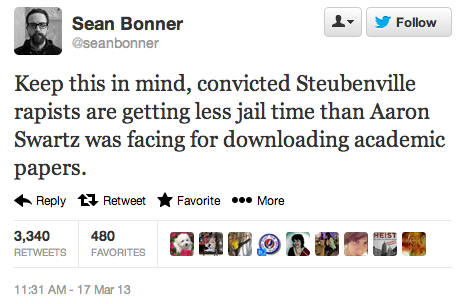
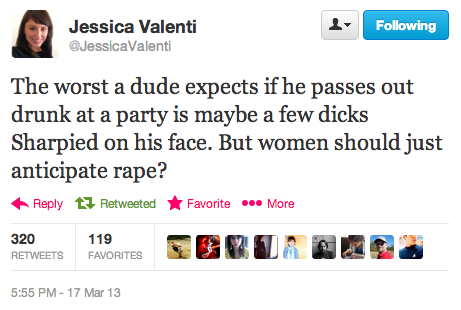
Women are taught how to prevent rape from happening to them, or taught how to try to defend themselves if someone tries to force themselves upon them, even from a young age. Don't go anywhere alone. Carry pepper spray on you. Don't be afraid to scream for help. Use your keys as a weapon. Don't wear that particular article of clothing; that's asking for trouble. Don't drink too much, even if you're just with friends.
I, myself, told a few friends I was going to walk to Cornerstone from the HUB one night, to go to a worship event - Abba's Daughters. All of them spoke up and suggested I bring a friend along or to ask one of our guy friends to come escort me over.
When a girl makes rape allegations (true or false), some questions that can be expected to come up are "How much did you drink?" or "What were you wearing?" or "Were you flirting with him?"
Or how about when a guy makes rape allegations that are true or false? It is estimated that there are over 300,000 instances of prison rape a year - 5000 of these instances are estimated to be of female victims and the other 295,000 to be male (source). This statistic is a prison statistic, and does not include statistics from the general population.
Even prison rape has become a normal thing to joke about. "Don't drop the soap!" "Clench those butt cheeks!"
We're teaching people to prevent rape. I, at this point in time, cannot confidently say that we're also teaching people to just not rape.
Family History
I was born and raised here in Spokane Washington. I've gone to the same church for 18 years. I've been in the same school system, with the same people, and same teachers. Needless to say my life has been consistent. I have only known one life until moving away to college.
However, it was not like this growing up for my grandparents on my fathers side. They were both born in Estonia, a small country on the head of the Baltic Sea, which become occupied by the Soviets in 1940. At this time my grandparents were early teens. Mass arrests, deportation and execution commenced with this occupation. Because of this and the many casualties to come from WWII, the estimated death rate was around 25% of the population. As it was no longer to safe to stay in the country my grandparents (separate at this time), fled the country to the east coast of the United States.
Although there are countless more stories they have told me, this is the general idea of what it was like to grow up in a nation under occupation and at war for something they do not believe in. One main story my grandma always tells me is that of the Singing revolution. Its about how Estonia was forced to sing Soviet propaganda songs at their traditional song festival, but one year they sang an Estonian patriotic song and the military could do nothing about it because there were 25,000 singers in the choir along with 300,000 citizens in the audience. This was more than one third of the population of Estonia.
This story is special to me because the reason I was born in the United States is because of all the events that happened to my grandparents. This contributes to my Culture of One exercise in which I wrote down the influence of my grandparents and the trips I have taken to visit where many of their stories played out. All of these experiences have made me the person I am today.
This video is a TED talk on the Singing Revolution
http://estonianworld.com/culture/david-drummond-on-the-singing-revolution-at-tedx-houses-of-parliament-2013-uk/
However, it was not like this growing up for my grandparents on my fathers side. They were both born in Estonia, a small country on the head of the Baltic Sea, which become occupied by the Soviets in 1940. At this time my grandparents were early teens. Mass arrests, deportation and execution commenced with this occupation. Because of this and the many casualties to come from WWII, the estimated death rate was around 25% of the population. As it was no longer to safe to stay in the country my grandparents (separate at this time), fled the country to the east coast of the United States.
Although there are countless more stories they have told me, this is the general idea of what it was like to grow up in a nation under occupation and at war for something they do not believe in. One main story my grandma always tells me is that of the Singing revolution. Its about how Estonia was forced to sing Soviet propaganda songs at their traditional song festival, but one year they sang an Estonian patriotic song and the military could do nothing about it because there were 25,000 singers in the choir along with 300,000 citizens in the audience. This was more than one third of the population of Estonia.
This story is special to me because the reason I was born in the United States is because of all the events that happened to my grandparents. This contributes to my Culture of One exercise in which I wrote down the influence of my grandparents and the trips I have taken to visit where many of their stories played out. All of these experiences have made me the person I am today.
This video is a TED talk on the Singing Revolution
http://estonianworld.com/culture/david-drummond-on-the-singing-revolution-at-tedx-houses-of-parliament-2013-uk/
Racially Stereotyped Characters
http://flavorwire.com/265006/the-most-racially-stereotyped-characters-on-tv-right-now/
This article talks about all the different stereotypes TV shows portray. A lot of the time people watch the show and find minority characters funny and don't realize its because the writers are making fun of their race. Most TV shows clearly stereotype certain characters. For example in the show Rob, they show his wife's grandma's house with pictures of Jesus all over it. They are stereotyping that all Latin Americans are really religious and have things with pictures of Jesus all over. As you look through the list of characters that are racially stereotyped you will probably find a show that you watch and never really realized how racist it is.
This article talks about all the different stereotypes TV shows portray. A lot of the time people watch the show and find minority characters funny and don't realize its because the writers are making fun of their race. Most TV shows clearly stereotype certain characters. For example in the show Rob, they show his wife's grandma's house with pictures of Jesus all over it. They are stereotyping that all Latin Americans are really religious and have things with pictures of Jesus all over. As you look through the list of characters that are racially stereotyped you will probably find a show that you watch and never really realized how racist it is.
Thursday, December 5, 2013
!!!!Meet The 17-Year-Old Who Blew The Lid Off Racial Profiling With His iPod
http://www.upworthy.com/meet-the-17-year-old-who-blew-the-lid-off-racial-profiling-with-his-ipod?c=reccon1
This is a totally different topic than what we have been discussing in class. Watching this video made me so conflicted with what I thought about racial profiling from the perspective of law enforcement. On one hand people of a minority race have to deal with being pulled over and searched mainly because of their race, but on the other hand police officers are trying to meet a quota that threatens their lively hood. What is right and what wrong? Obviously the police officer that was recorded was way out of line and abused his powers, but does his actions represent all officers? What role does the quota play in an officers actions? What do you think the officers should do? Even though the officers have to deal with a quota, are their justifications valid? Here is the 2012-2013 demographics of NYC.
http://suburbanstats.org/population/how-many-people-live-in-new-york
I'm a little upset that I found this video so late in the semester because I want to have a in-class discussion on this but the only class we have is the final. Maybe an online discussion?
This is a totally different topic than what we have been discussing in class. Watching this video made me so conflicted with what I thought about racial profiling from the perspective of law enforcement. On one hand people of a minority race have to deal with being pulled over and searched mainly because of their race, but on the other hand police officers are trying to meet a quota that threatens their lively hood. What is right and what wrong? Obviously the police officer that was recorded was way out of line and abused his powers, but does his actions represent all officers? What role does the quota play in an officers actions? What do you think the officers should do? Even though the officers have to deal with a quota, are their justifications valid? Here is the 2012-2013 demographics of NYC.
Population By Races | |||||||||||||||||||||||||||||||||||||||
|
http://suburbanstats.org/population/how-many-people-live-in-new-york
I'm a little upset that I found this video so late in the semester because I want to have a in-class discussion on this but the only class we have is the final. Maybe an online discussion?
16 Things You Should Never Say To Mixed-Race People
http://www.buzzfeed.com/video/micaela/16-things-you-should-never-say-to-mixed-race-people
A girl from my high school posted this on Facebook and said "welcome to my life". The video gives an insight into some of the things that mixed-race people have to deal with.
I wanted to post a blog on this video because I though it gave a perspective that really dived into the reality of someone that is mixed-race or a minority race. It scratches the surface of stupid questions, assumptions, and clueless remarks that people make about someones skin color or characteristics. I have personally experienced some of the scenarios acted out in the video, and I thought it was awesome to see someone find the video and voice out their opinion to a social setting.
In response to the post one person said "is there any way to ask someone about their ethnicity or race without being offensive?" Then another girl answered his questions by posting a link called, How to Ask Someone About Their Ethnicity Without Being an Asshole.
http://jezebel.com/how-to-ask-someone-about-their-ethnicity-without-being-758679070
The author of the article is very sarcastic and blunt, but she makes some good points on how to address a persons curiosity about another person's ethnicity or race. I personally feel that both links work well together because one presents the problem and the other presents a solution to the problem.
Let me know what you think!!
A girl from my high school posted this on Facebook and said "welcome to my life". The video gives an insight into some of the things that mixed-race people have to deal with.
I wanted to post a blog on this video because I though it gave a perspective that really dived into the reality of someone that is mixed-race or a minority race. It scratches the surface of stupid questions, assumptions, and clueless remarks that people make about someones skin color or characteristics. I have personally experienced some of the scenarios acted out in the video, and I thought it was awesome to see someone find the video and voice out their opinion to a social setting.
In response to the post one person said "is there any way to ask someone about their ethnicity or race without being offensive?" Then another girl answered his questions by posting a link called, How to Ask Someone About Their Ethnicity Without Being an Asshole.
http://jezebel.com/how-to-ask-someone-about-their-ethnicity-without-being-758679070
The author of the article is very sarcastic and blunt, but she makes some good points on how to address a persons curiosity about another person's ethnicity or race. I personally feel that both links work well together because one presents the problem and the other presents a solution to the problem.
Let me know what you think!!
Culture of One
The culture of one exercise that was done in class a few weeks ago caused me to stop and think in ways I have not thought in quite a while. What is it that makes me who I am? Am I a product of my environment, my family, my education? What is it that causes me to believe the things I believe and act the way I act?
After some thought I realized that many things cause me to be the person I am. These things range from my family and friends, where I grew up, my hobbies, such as sports and dance, and my education. However, the thing that has influenced me most is my religion.
I grew up in a Christian home and went to the same tiny Presbyterian church my whole life. My church family was a huge support for me throughout my life, and my youth pastor became my mentor throughout high school. However, none of this has had the impact on my life the way my relationship with Jesus has. I have learned through good and bad times, through depression and love, through heartbreak and joy, that no matter what I gain or lose, God remains constant. He is the only consistent thing in my life; the only one who I know will never change or fade away.
This strength in the promise of who God is has shaped me more than anything else in my life. Even when I change, God does not. Even when I do not want to go on, Jesus gives me a purpose for living. I am nothing without Him, and there is more freedom in this than I can express. I do not have to be a certain way with God. When I live my life in and through and for Him, I can fully be me. By giving my life to Him, by losing my own life, I become alive. I become whole only by letting go of all.
If there is anything that has made me who I am, it is Jesus, and I would have it no other way.
After some thought I realized that many things cause me to be the person I am. These things range from my family and friends, where I grew up, my hobbies, such as sports and dance, and my education. However, the thing that has influenced me most is my religion.
I grew up in a Christian home and went to the same tiny Presbyterian church my whole life. My church family was a huge support for me throughout my life, and my youth pastor became my mentor throughout high school. However, none of this has had the impact on my life the way my relationship with Jesus has. I have learned through good and bad times, through depression and love, through heartbreak and joy, that no matter what I gain or lose, God remains constant. He is the only consistent thing in my life; the only one who I know will never change or fade away.
This strength in the promise of who God is has shaped me more than anything else in my life. Even when I change, God does not. Even when I do not want to go on, Jesus gives me a purpose for living. I am nothing without Him, and there is more freedom in this than I can express. I do not have to be a certain way with God. When I live my life in and through and for Him, I can fully be me. By giving my life to Him, by losing my own life, I become alive. I become whole only by letting go of all.
If there is anything that has made me who I am, it is Jesus, and I would have it no other way.
Model Minorities Fighting the Master Narrative
The three men protest other aspects of our society. By being called Asian Americans, they feel displaced; they are called Asians in America, and in Asia they are called Americans, so where do they belong? Another aspect they decry is that there is a model minority myth.
I appreciate the fact that they included Indian Americans (I say this for distinction alone; I know that they can be called simply "Americans") when they speak of the model minority myth.
The tape across the mouths of the people in the video represents the fact that until now, Asian Americans have been relatively silent and have flown under the radar of CRT, but now must make themselves known. The singers are imploring other Americans whose heritage is from Asia or India to speak out. Most Americans, due to the black-white binary, are fully aware of the civil rights movement and understand the purpose of gaining rights for black people in ghettos and making their educational experience better. But what about the Asian and Indian Americans that are slumped into that category simply because of their minority status? Their history and narrative are far different than African Americans'. They often are well-educated and self-sufficient, which leads to the myth of the model minority. They must be treated as a separate entity from African Americans. It was awesome to hear these men's side of the story; I will try to avoid labeling people as "Asian American" in the future, because until now, I never thought that it would make them feel alienated. I always considered it a sort of sign of respect. This class is helping me to understand other cultures more thoroughly.
Racist and Sexist Comments Cause CBS to Fire Don Imus
Don Imus, a radio voice for CBS for almost 30 years was fired after making a comment about the Rutgers woman's basketball team. The team had just lost their national championship game, and Imus, while commenting on the game, called the women on the team, "nappy-headed hos". The radio world heard this and quickly responded with outrage and anger. CBS fired him almost immediately, though he was in the middle of a two day radio fundraising event. The article I will attach to the bottom this post quotes Sharpton (another radio host) saying, "He says he wants to be forgiven, I hope he continues in that process. But we cannot afford a precedent established that the airways can commercialize and mainstream sexism and racism." Though there are many supporters of Imus, I am thankful that a majority of the radio world responded to Imus the way they did. Though he made many apologies to the Rutgers team, they did not officially forgive him. I am sure that many radio hosts took note of this event and are now all the more careful to be aware of what they say. Even the most experienced radio voices can mess up, but when it is a comment this vulgar, it is hard to forgive, and the CBS made the choice to rid their show of Imus rather than face the consequences of letting such a comment slide.
http://www.foxnews.com/story/2007/04/13/don-imus-fired-by-cbs-radio-for-racist-comments-one-day-after-msnbc-drops-show/
http://www.foxnews.com/story/2007/04/13/don-imus-fired-by-cbs-radio-for-racist-comments-one-day-after-msnbc-drops-show/
Perpetuating Stereotypes with Humor
Another character that shows a distinct stereotype held by many Americans is the character of Duayne, Bon Qui Qui's African American crush. His appearance is stereotypical for black men: his shirt is a white wife-beater, his jeans are saggy, and his hair is done in corn rows. I would like to point out that their only interaction consists of rapping and dancing, two activities that people in minorities are renowned for. In addition, in Bon Qui Qui's rap, she mentions the fact that Duayne is on house arrest and already has two strikes; this only bolsters the idea of black men belonging in prison.
A third character that jumps out at me is Bon Qui Qui's boss; he is shown as the subordinate of a white, middle-aged male; why did the producers chose him to be the boss? The answer is that the stereotypical person in power in our culture is indeed a white man in his 40's. However, one should notice that this stereotype does not apply to the most ostentatiously powerful man in America (and the world?), Barack Obama. That stereotype is perhaps not as justified as one might think and it should be adjusted.
My main point is that, while this skit is funny and extremely quotable, it does nothing to help the plight of Mexican Americans or African Americans. It only serves to entrench ideas of traditional stereotypes in the minds of those who do not know any better.
The Effect of One Juror
A recent study of race and jury trials done in Florida had
astounding findings. When juries are
made up solely of white people, they convict black people 16% more often than
they convict white people. They also
found that one black juror’s presence in the jury box brings the conviction
rate of blacks back down to that of whites.
The inclusion of one black person in the proceedings completely erased
the discrepancy!
In application, one looks back to previous trials and
wonders how this could have played a role in tragic trials such as the recent
Zimmerman trial. In this case of the murder of a black teenager on the basis of his appearance, the jury
was made up of five white women and one Hispanic woman; by all rights, a black juror should
have had a place in the proceedings and decision-making. We
are guaranteed an “impartial jury” by the Constitution, so is it not a failure on
the part of the court system to not have people of various backgrounds in the
jury box rather than white people only in this case?
So why has this not changed? Because jurors are chosen, not from the victim's, but from the defendant's peers. Zimmerman is Latino, which is considered white: thus, the strategic choice of jurors. I have recently learned in my business law class that the defense has the right, called peremptory challenge, to strike any potential juror from the list of possible jurors before a trial for any reason except race (but they can find other reasons to state in order to get rid of a possible juror of the wrong ethnicity). This is a structural deficiency in our justice system. The only approach that seems to be counteracting this is by Chicago's new top federal judge, Chief Judge Ruben Castillo, to cast a wider net for jurors into poorer communities and actively demonstrating the value of jury service to minority communities.
Sources:
http://bigthink.com/praxis/the-quiet-racism-in-the-zimmerman-trial
http://www.suntimes.com/news/metro/21813399-418/new-top-federal-judge-increases-efforts-to-get-more-black-and-latino-jurors.html
http://www.suntimes.com/news/metro/21813399-418/new-top-federal-judge-increases-efforts-to-get-more-black-and-latino-jurors.html
Subscribe to:
Posts (Atom)